31st March 2026
Reconstructing Clementhorpe
Lives hidden in personal and national archives
Ben Robinson writes about his new book, which reflects life in Clementhorpe during World War I
My debut book, Finding Charlotte, will be published in June, but its foundations were laid a decade ago in a cupboard in Scarborough.
Little did I know, as I looked through my great-grandmother's personal archives, that this tale would bring me to York. There were old cases filled with documents and photographs that had been saved from the war years. At the time, over a decade ago, I was a teenager who didn’t quite understand the gravity of these artefacts. Cut to 2024, and I decided it was time to do something with them by piecing together my great-gran's story - beginning in York.
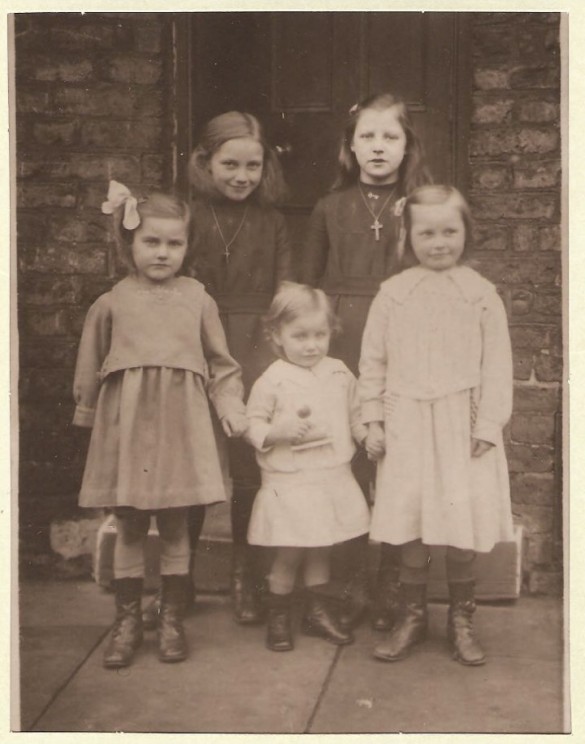
Like many family histories, it began with names and half-remembered dates on a scrap of paper. It was only when I turned to archival sources that a clearer picture began to emerge... in Clementhorpe. I discovered that my great-grandmother, Charlotte Smith, was born in Caroline Street in 1914, just off Bishopthorpe Road. The street no longer exists, but thanks to Seebohm Rowntree’s work, we know it was a typical working-class house: two up, two down, and home to eight people – Charlotte, her five sisters, and their parents.
It felt like the perfect Edwardian setting for my book. More importantly, the census returns and newspapers began to create an image of the social fabric of Clementhorpe. Patterns of work, housing, and family life were revealed. As my research deepened, the opening chapters became less about one life and more about viewing Clementhorpe through a social-historical lens.
It was firstly through the census that this world truly began to expand; not just into the lives of my family, but also those around them. Context became key when writing the book. Take their street, for example: Clara Laycock lived three houses down with her brother. She had been recently widowed, leaving her with two young daughters to support. On the other side lived a family of confectioners, and next to them a family of railway workers. Further along, one household contained a mother with five sons and only two bedrooms between them.
Newspaper archives added another layer. Where genealogical records provide structure, newspapers offer detail. Through them, I was able to uncover more about figures like Clara Laycock. Not just that she was widowed, but how her husband died and what ensued in the years after. (You’ll have to read the book for that story though.)
These details, though small, build a picture of Clementhorpe in the early twentieth century. It was an area defined by industry and working-class life. From here, I was able to form a clearer image of what life would have been like for my great-grandmother.
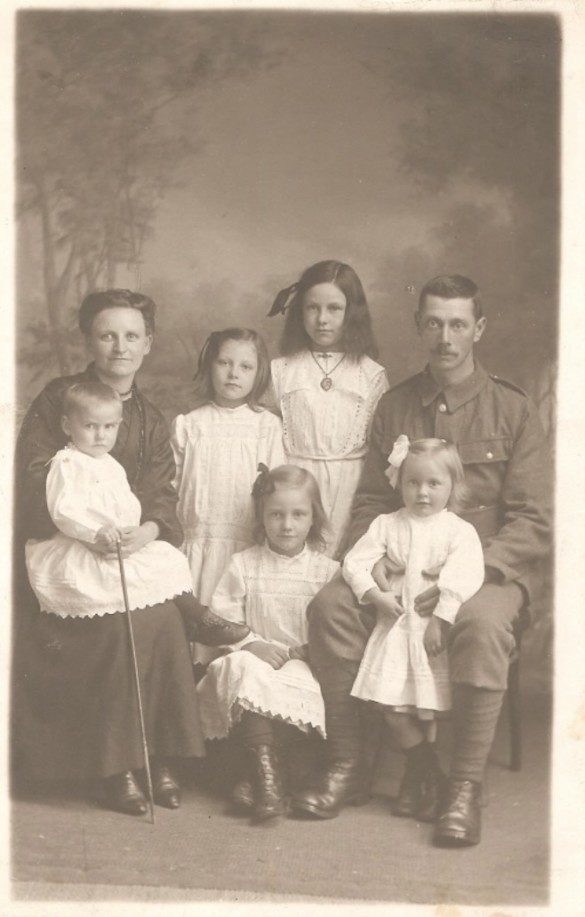
My research then turned to World War I. Charlotte’s father, William Henry Smith, had served (as evidenced by this family photograph) but, like many WW1 soldiers, his service records were lost, likely destroyed during the Blitz of 1940. Using a combination of archival traces and family memory, it seems he was absent for part of the war and likely discharged early due to injury.
However, William Henry’s time away was not the only way that WW1 affected the Smith family. On the 2 May 1916, York was struck during a Zeppelin raid. The Smith family lived at 77 Caroline Street, directly opposite a house that was destroyed that night.