Clements Hall
Book cover quality image from LC

Clements Hall Local History Group

Exploring the Scarcroft, Clementhorpe, South Bank and Bishophill areas of York

Clements Hall Local History Group

Exploring the Scarcroft, Clementhorpe, South Bank and Bishophill areas of York

View navigation

Remembering the Lion and Lamb


We’re busy researching our latest book, this time about Blossom Street. While quite short, only around 300 yards long, this wide street has played an important part in York’s history over many centuries.

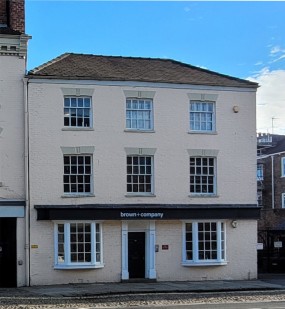
39 Blossom StOne of its key features has been the varied inns and public houses, mostly now gone, which accommodated travellers and their horses and cattle in past centuries. People might remember for example the Lion and Lamb, a favoured drinking place. It closed in the 1980s and is now the offices of Brown and Company architects, at no.39. The present Georgian style building dates from 1828, but an inn was first mentioned here in 1783, catering for guests and their horses.
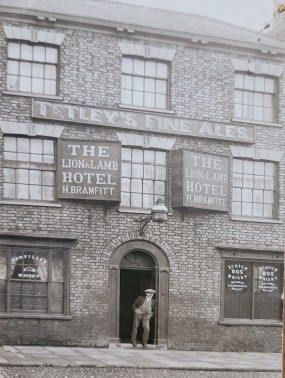
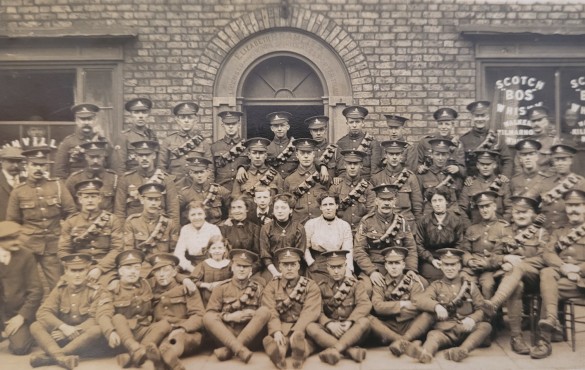
Lion and Lamb 300The Lion and Lamb around 1910

The pub was impressively in the same family of licensees from 1904, when Elizabeth Bramfitt (known as Dot) had the licence, with her husband Harry. He died in 1914, and in 1916 she married soldier Charles Greaves, who joined her with the tenancy. Charles and Elizabeth were succeeded by their son John Greaves and his wife Doreen in 1966, just before Charles' death in 1967, at the age of 88. They eventually retired in 1986. But despite the family's long service as tenants, the brewery decided to run it with a manager rather than a tenancy arrangement. This was a great disappointment to the family, with the lack of recognition by the brewery of their long-term role at the pub.

20260304_131516

It has an eventful history. On the outbreak of World War I in 1914, the Government arranged for the stabling of up to 68 horses at the pub, at a weekly price of one shilling and nine pence per horse. Soldiers were also billeted there, to live in large sheds at the rear. For this the Government paid two pounds, three shillings and nine pence per week.

Later on, the large area of land behind the pub attracted custom from long distance lorry drivers, who could stay there and park their vehicles in the yard. All of the land at the back which had been used for sheds, garages and lorry parking has now been built on, for St Mary’s Court.

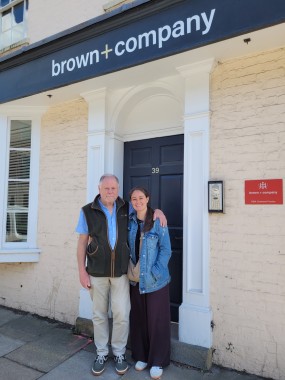
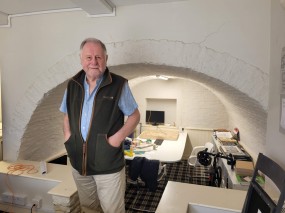
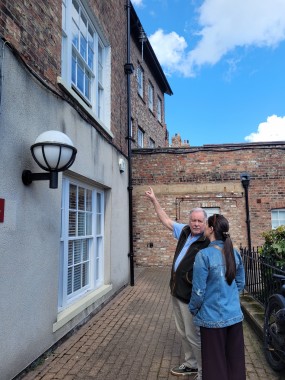
20260413_150009 (1)20260413_140547This week we paid a visit here with John Greaves’ son Duncan and his daughter Olivia, when architect Neil Brown kindly showed us around the ground floor. 20260413_143101Although much of the interior has been modernised for offices, Duncan recalled fond memories of living here for many years, his family home. The offices retain a lower area with an arched roof, remembered by Duncan as the top cellar.


A strict approach was taken by Duncan's mother in the 1970s to music being played when there was no music licence. In 1972 she ejected a small group of young men who were playing instruments. Sadly she was told that this group were a famous folk/rock band of the day called ‘Lindisfarne’, who were staying nearby at the drummer's brother's house that night. Their song Lady Eleanor was in the charts at No.7 that very week! They had made several hit records, including ‘Fog on the Tyne’, which reached No. 1.

The pub was part of the Micklegate Run, and this, together with the new Odeon cinema opening in 1937 brought much trade after the war. Passengers who alighted from a bus there usually came into the pub before and after the films they went to see. 

But by 1987, under wholly new management, it changed its name, and its whole identity, to become the ‘Nickel and Dime, an American themed pub with TVs. This only lasted a year, then it closed its doors for good, to be converted into offices.